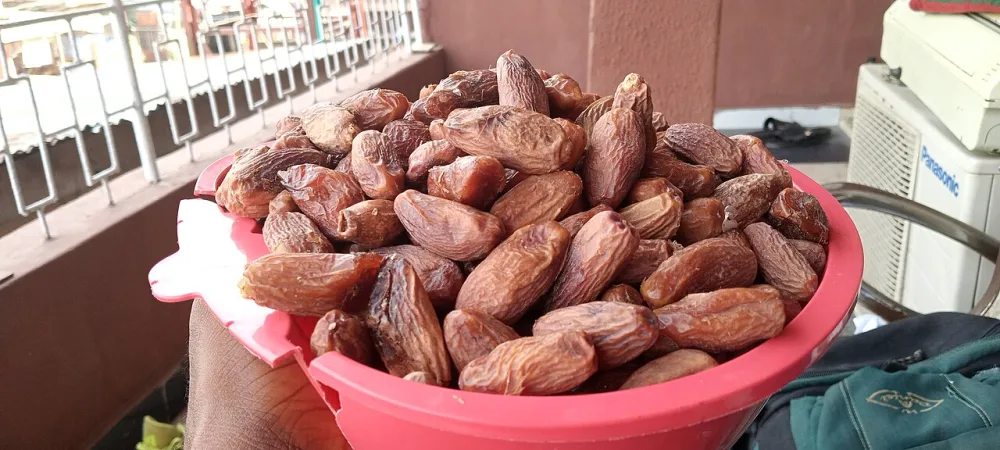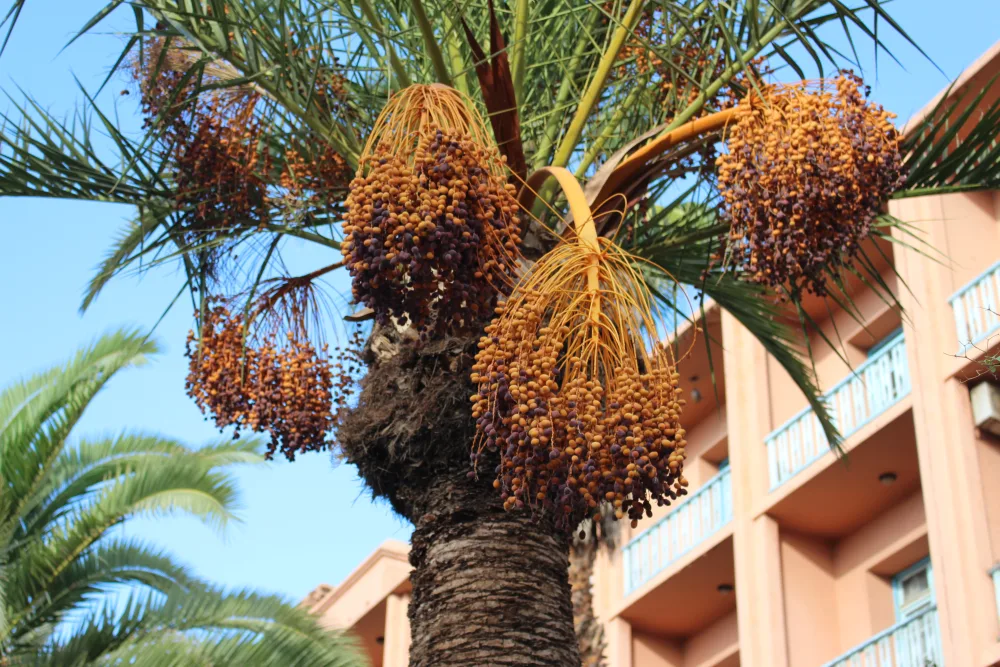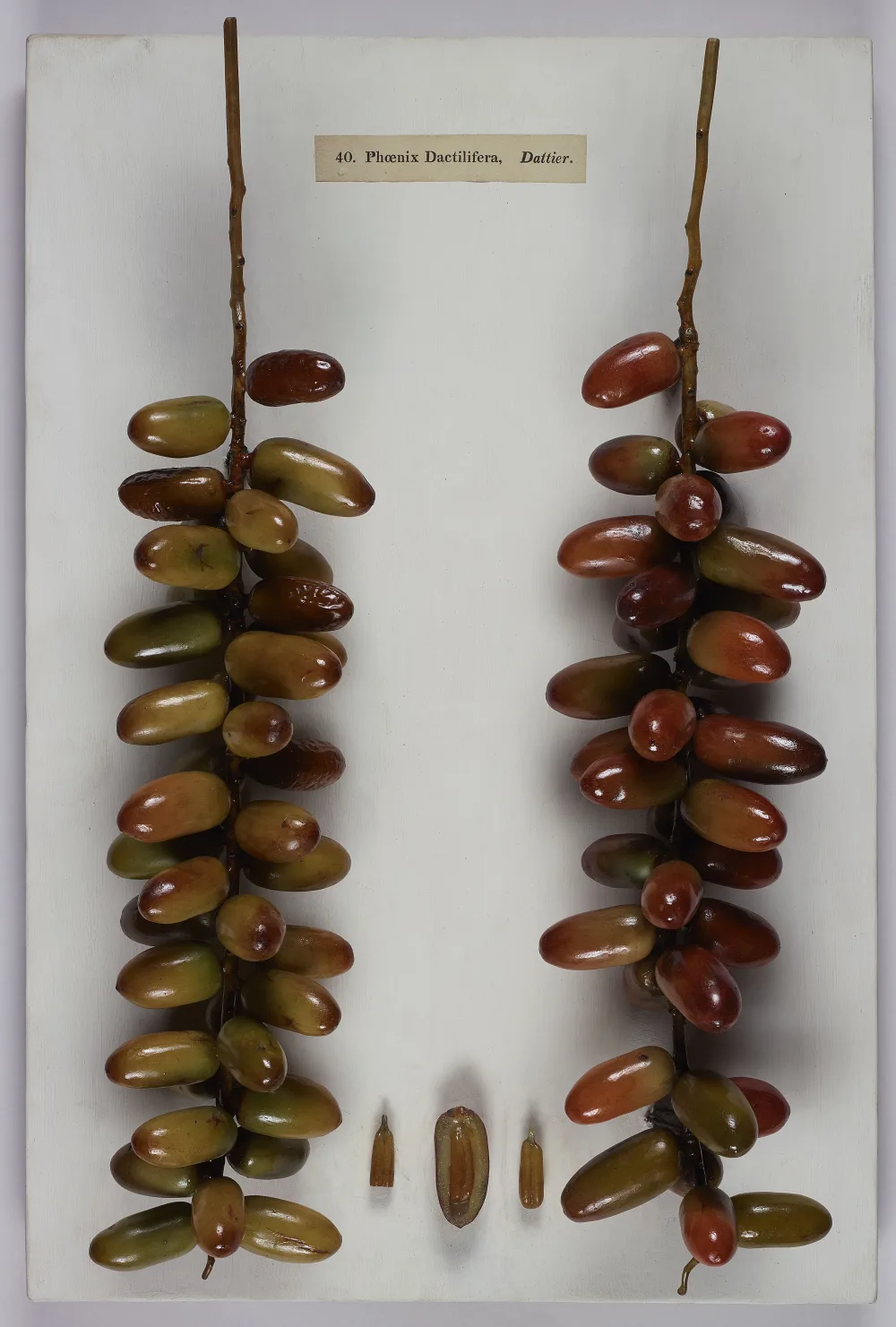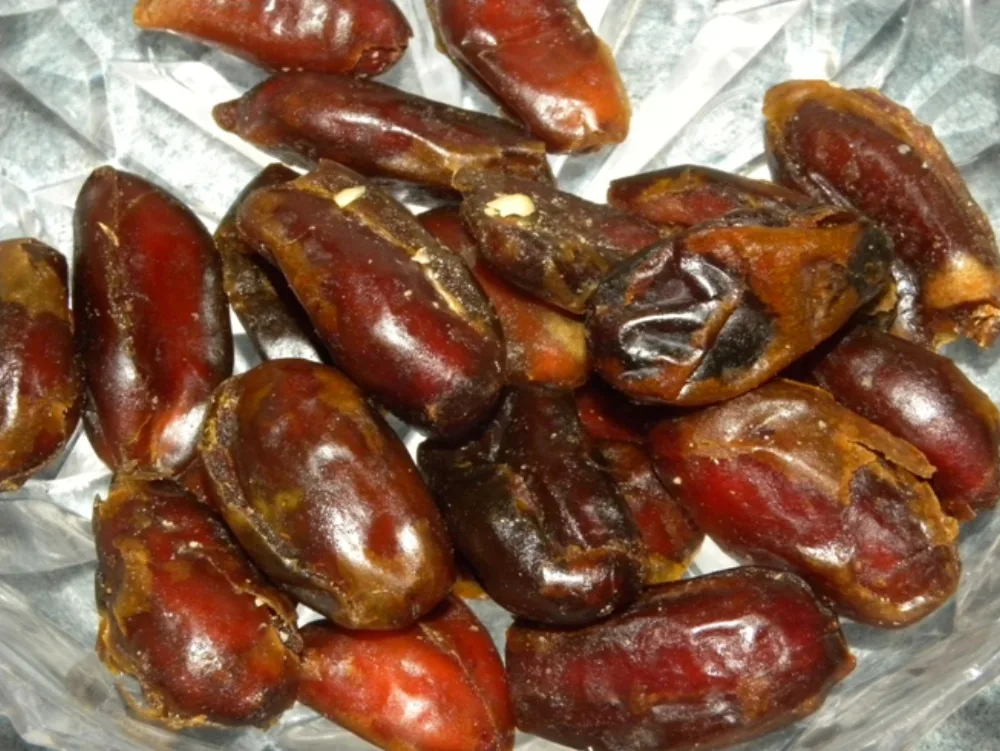
Every Ramadan afternoon, millions of Indonesians hunt for takjil — and since the war takjil phenomenon went viral in Ramadan 2024, the hunt even crosses religious lines. But did you know "takjil" was never the name of a food? This article covers the word's origin, its long history in the archipelago, why dates for takjil hold a standing no fried snack or kolak can claim, and five date takjil recipes you can make at home — or sell.
What Does Takjil Actually Mean?
Takjil is borrowed from the Arabic taʿjīl, meaning to hasten. In the fasting context it means hastening to break the fast the moment Maghrib arrives — an encouragement, not a snack. Indonesian media such as detik.com have traced this semantic shift: in everyday usage, takjil came to mean the light bites that open the fast. Both senses are now fine in conversation — but knowing the original meaning deepens the Ramadan afternoon ritual: what is recommended is promptness, and dates are promptness' simplest tool.
A Short History: From 1890s Aceh Mosques to War Takjil
The tradition of sharing iftar food at archipelago mosques is documented since at least the late 19th century. The Dutch orientalist Snouck Hurgronje, in De Atjehers (1891–1892), recorded communal iftar traditions at Aceh's mosques — proof that free mosque takjil is no recent trend but a heritage older than the republic. Jump to the social media era: Ramadan 2024 birthed war takjil, when hunting iftar snacks became a cross-faith delight covered widely by national media. The takeaway for mosque committees and sellers: takjil demand is not merely busy — it is a cultural ritual with historical roots and enormous yearly search volume.
For committees and sellers, the phenomenon carries two practical lessons: prepare more stock than projected, because takjil hunters now come from beyond the congregation circle, and start selling or distributing earlier — war takjil queues form long before the call to prayer. Dates are the safest choice amid that bustle: they don't spoil while waiting and don't spill in the scramble.
Why Dates Are the Most "Well-Sourced" Takjil
Of everything in a takjil bag, only dates carry a practice modeled directly in an authentic narration: the Prophet ﷺ broke his fast with fresh or dried dates before praying, and with water when neither was available (Sunan Abu Dawud no. 2356). Add the practical advantages committees love:
- No cooking — just weigh and portion, with minimal spoilage risk
- Distribution-proof — semi-dry varieties like Zahedi hold up in open air
- Measurable portions — the standard 3 dates per bag makes planning easy
- Universally accepted — from Quran-class kids to elderly congregants
5 Date Takjil Recipes
1. Iced Date Milk
Rough-blend 5–6 pitted Sukkary dates with 250 ml cold milk, add shaved ice. Naturally sweet with no added sugar — a best-seller on takjil stalls.
2. Nabeez (Date Infusion Water)
Soak 5–7 dates in 500 ml of drinking water for 8–12 hours in the refrigerator; drink the water and eat the dates. Critical safety notes: always soak chilled, finish within 24 hours, and discard if it smells sour or fizzy — sweet infusions ferment quickly.
3. Nut- or Cheese-Stuffed Dates
Split Safawi or Mabroom dates and replace the pit with roasted cashews or cheese slivers. A premium-looking takjil on a simple budget.
4. Date-Banana Smoothie
3 dates + 1 banana + 200 ml milk or yogurt, blended smooth. Filling — works for suhoor too.
5. Chocolate-Sesame Dates
Dip dates in melted chocolate, sprinkle toasted sesame, chill. A kids' favorite and the widest-margin selling idea.
Choosing the Right Variety for Takjil
Not every date is destined for the same job. The quick map:
- Zahedi — cheapest per serving and heat-tolerant; champion for mosque-gate handouts and open-air bazaars
- Sayer — chewy with deep sweetness; best for processed recipes like iced date milk and date syrup
- Sukkary — caramel-soft; the premium takjil cup pick and the choice for special nights like the last ten
All three come in 5–10 kg cartons as well as value packs, so small committees and first-time sellers never have to commit to big volumes on their first attempt.
Date Takjil for Events: Quran Classes, Offices, and Communities
Outside the mosque, portions shift slightly. For Quran-class children, 2 dates per child is plenty — a 100-child event means ±200 dates, just ±2 kg. For an office iftar, a 2 kg date tray plus cup water serves ±60 people as the opener before the main catering. For community bazaars, sealed cups are far more hygienic than open trays — and easier for attendees to carry home. One principle holds: dates are the takjil easiest to count, carry, and account for.
Portion and Cost Math
The standard date takjil serving is 3 dates (±30 g). So 1 kg yields ±30 servings, and one 5 kg Zahedi carton yields ±190–230 servings at a cost that can fall under Rp1,500 per person. For a 100-person event, 10 kg of dates is more than enough — far easier to calculate than cooking kolak for the same crowd.
Are you a mosque committee, a business owner, or a family stocking up for the month? Hilal Kurma supplies wholesale dates for takjil in 5–10 kg cartons plus value packs, delivered fast from our Cakung, East Jakarta warehouse across Greater Jakarta. Discuss your needs and weekly delivery schedule via WhatsApp +62 823-4350-8579.