The question "which date variety is best for Ramadan?" is actually wrong from the start — because the answer depends on what you are buying the dates for. The best date for handing out takjil to hundreds of worshippers is clearly different from the best date for an office gift box. Instead of memorizing a list of names like many listicles do (mybest, kumparan, liputan6 all show rows of brands), this guide maps varieties by real Ramadan needs, complete with the logic behind each.
Four Buying Scenarios, Four Different Picks
| Need | Fitting variety | Why it fits | Common format |
|---|---|---|---|
| Mass takjil (mosques, donations, sellers) | Zahedi, Sayer | Semi-dry, heat-tolerant, most economical carton price | 5–10 kg carton |
| Daily family iftar | Sukkary | Soft, caramel-honey sweet, loved by all ages | 500 g, 1 kg, family bundle |
| Upgraded daily iftar | Safawi, Mabroom | Chewy-rich, calmer sweetness, mid-premium tier | 1 kg |
| Gifting & guest servings | Ajwa, jumbo Medjool, Piarom | Premium presentation, sunnah/luxury story for gifts | 500 g–1 kg gift box |
1. For Mass Takjil: Pick What Survives the Field
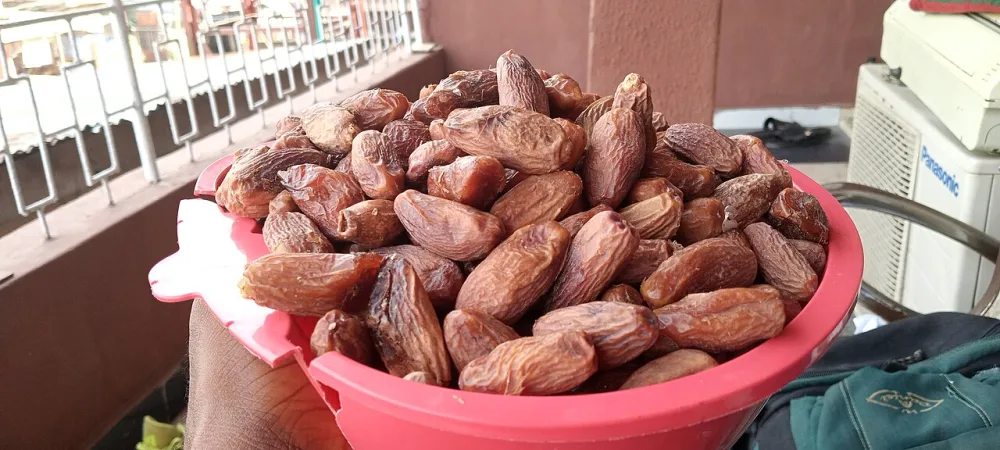
When you must serve hundreds of people with a single buying decision, two things decide it: cost per date and resilience when handed out in open air. Zahedi and Sayer dates win here. Both are semi-dry with low moisture, so they won't melt or stick to hands even when distributed at the mosque gate before Maghrib. Their price is also the friendliest. One 5 kg Zahedi carton equals ±575–700 dates, enough for ±190–230 three-date takjil servings. For mosque committees and takjil sellers, this is the sensible budget tier.
2. For Daily Family Iftar: Pick What Every Palate Likes
At the family table, iftar dates must taste wonderful from the first bite and be gentle on a stomach empty all day. Sukkary dates from Al Qassim are the classic favorite: soft, caramel-honey sweet, and almost never rejected by children. Nutritionists generally suggest 3–5 dates at iftar to restore blood sugar without shocking the stomach (galamedia, kumparan). Sukkary comes in 500 g and 1 kg retail packs, up to family bundles combined with other varieties.
3. For an Upgraded Iftar: Mid-Premium Without Overspending
Some families want to raise their daily iftar quality without jumping straight to the highest premium price. This is where Safawi from Madinah and Mabroom dates come in: Safawi is glossy-black with a chewy-rich texture and calmer sweetness, while Mabroom is long and chewy with a mellow flavor. Both suit suhoor and everyday guest servings — the "premium that still makes sense" tier.
4. For Gifting and Guest Servings: Pick What Tells a Story
For gifts, you sell not just flavor but impression. Ajwa dates from Madinah carry a sunnah significance as a distinctive date — the pick for recipients who value religious meaning. Jumbo Medjool looks large and luxurious with thick, soft flesh. Piarom dates — often called the "chocolate date" — are elegant and not overly sticky, ideal for office serving. These three form the core of gift boxes and corporate hampers.
A Brief Note on Nutrition
Whatever the variety, dates are a single-ingredient snack with no added sugar. For context, USDA FoodData Central records Medjool dates per 100 g as roughly 277 kcal, 6.7 g fiber, and 696 mg potassium; one large date (±24 g) is ±66 kcal. Alkaabi et al. (Nutrition Journal, 2011) measured the glycemic index of five date varieties at 46.3–55.1 — low to medium, friendlier than their sweetness suggests. Keep portions sensible; people with diabetes should consult a clinician. (Educational information, not medical advice.)
Three Common Mistakes When Choosing Dates for Ramadan
Many buyers regret their purchase not because they picked the wrong variety, but because they mismatched the variety to the need. The three most frequent traps:
- Buying premium for mass handouts. Distributing Ajwa or Medjool to hundreds of worshippers is noble, but the budget runs out fast. For volume, Zahedi or Sayer makes far more sense — the virtue of takjil charity isn't measured by the date's price.
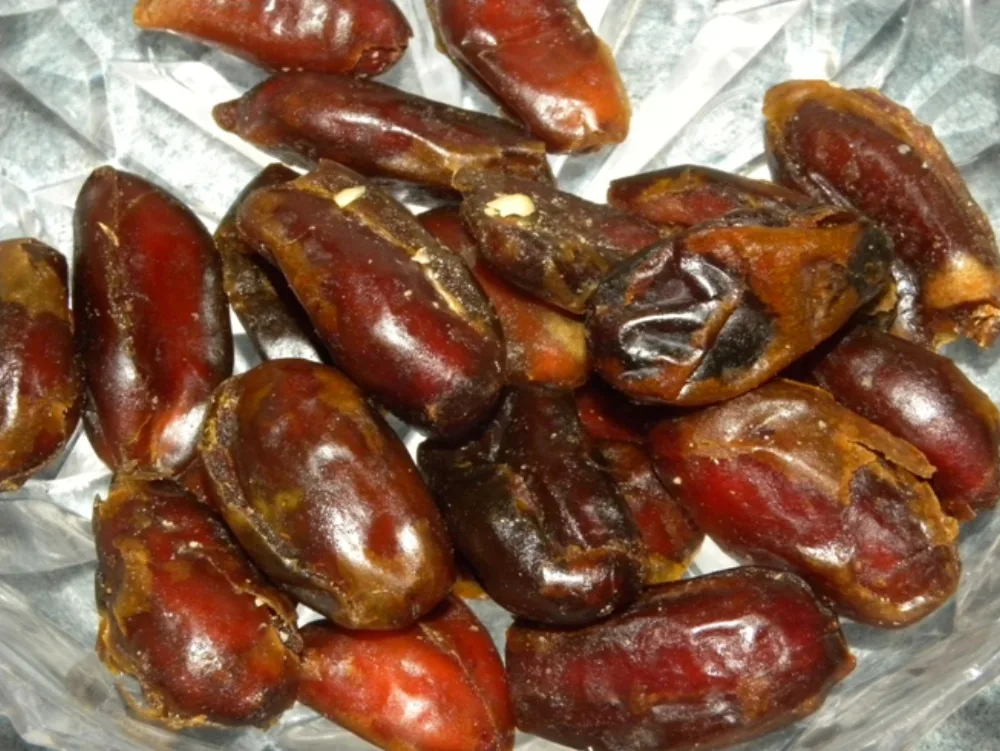
- Buying very moist dates to carry around. Very moist dates like rotab are delicious but not ideal for mosque-gate handouts or long-journey gifts because they're sticky and less stable at room temperature. Choose semi-dry for that.
- Buying only one variety for everything. Iftar, suhoor, and guest needs differ in character. Relying on one type for all leaves one of those needs underserved.
On Grade and Date Size
Beyond variety, the same variety can come in several grades and date sizes. Generally, a higher grade means larger, more uniform, cleaner-looking dates — relevant for gifts and guest servings, where appearance shapes the impression. For mass takjil where respectable taste and an economical price matter most, a standard grade is sufficient. Packaging follows the need too: 500 g and 1 kg for household retail, 3–5 kg value packs for those who cook a lot, and 5–10 kg cartons for committees and resellers. When calculating needs, remember the practical benchmark of ±100 dates per kg to easily convert recipient counts into kilograms.
A Practical Way to Decide in 30 Seconds
- Handing out to many people on a tight budget? Zahedi/Sayer cartons.
- Daily family stock everyone likes? Sukkary.
- Want a more special iftar without overspending? Safawi/Mabroom.
- A memorable gift or guest serving? Ajwa/Medjool/Piarom.
You don't have to pick just one. Many families and committees combine: Zahedi to hand out, Sukkary at home, and a little Ajwa for guests. If you'd like help assembling a combination to fit your budget and recipient count, consult us via WhatsApp +62 823-4350-8579. The Hilal Kurma team can recommend the right package — from a single family box to dozens of cartons for mosques and pesantren.