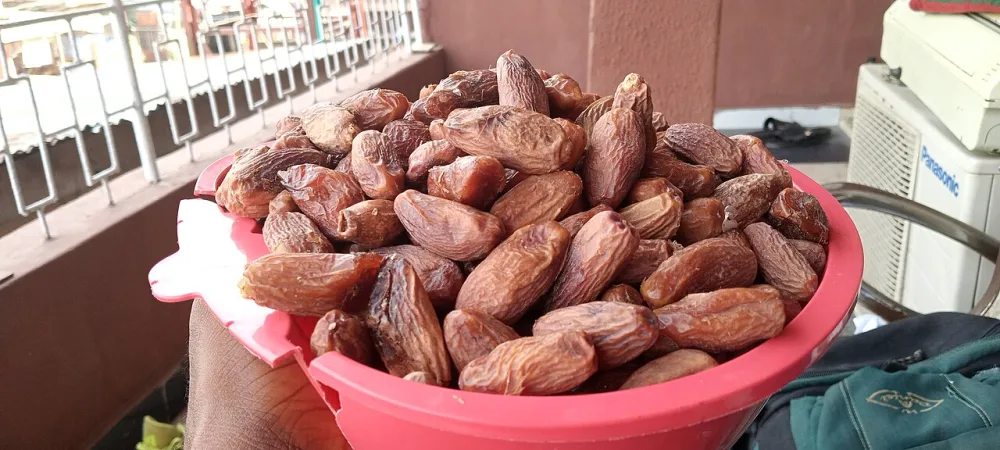
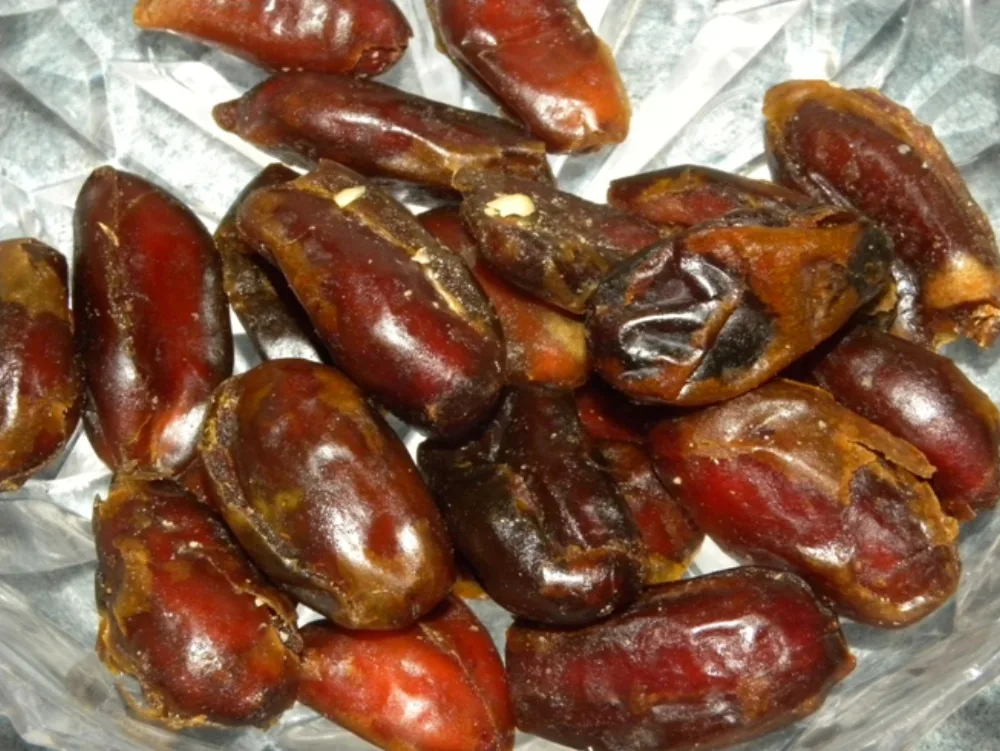
Every year, thousands of Ramadan committees face the same arithmetic: how many kilograms of dates for our mosque? Is the budget sensible? How do we account for it in the report? This article is the toolkit we built from serving mosque, prayer-room, and pesantren committees across Greater Jakarta — complete with formulas, budget simulations, and a donation flow you can table at tonight's committee meeting.
The Takjil Portion Formula
All planning starts from one simple formula:
Need (kg) = Congregation × Dates per person × Number of days ÷ Dates per kg
Dates-per-kilo benchmarks (estimates, varying by harvest size): Sukkary ±90–110, Zahedi ±115–140, Sayer ±90–110. The common serving standard is 3 dates per person — aligned with the sensible 1–3 date iftar practice (no authentic narration fixes a number; see our iftar sunnah article).
Simulation: Mosques of 100, 200, and 300 (30 Days)
| Average congregation | Total dates (3 × 30 days) | Zahedi needed | Budget estimate* |
|---|---|---|---|
| 100 people | 9,000 dates | ±65–78 kg ≈ 13–16 five-kilo cartons | ±Rp2.5–4.3 million |
| 200 people | 18,000 dates | ±130–157 kg ≈ 26–32 cartons | ±Rp5.0–8.7 million |
| 300 people | 27,000 dates | ±195–235 kg ≈ 39–47 cartons | ±Rp7.5–13 million |
*Using the Zahedi carton range of Rp190,000–275,000 (5 kg). Choosing Sukkary? Multiply the kg need by about 1.2× (larger dates) and adjust the carton price.
Two field notes: first, weekends and the last ten nights overflow — add a 15–20% buffer. Second, not every mosque distributes takjil all 30 days; many run Monday–Thursday or weekend-only patterns, and the formula simply takes a smaller day count.
Match the Variety to the Mission
- Zahedi — most economical, semi-dry, hands out at the mosque gate without stickiness; the mass-distribution champion
- Sayer — slightly softer with deeper sweetness; right for indoor serving and processing kitchens
- Sukkary — the upgrade congregants will praise; fitting for the last ten nights or special evenings
Pesantren Specifics: the Per-100-Santri Math
Dates for pesantren behave differently: consumption runs daily for everyone (not just attendees), foundation budgets are tight, and kitchen stores lack refrigeration. The math: 100 santri × 3 dates × 30 days = 9,000 dates ≈ 82–100 kg of Sayer ≈ 9–10 ten-kilo cartons, budgeting ±Rp3.2–4.9 million per month — about Rp1,100–1,600 per student per day. For foundations we offer installment billing and official invoices, plus weekly deliveries so stock stays fresh and storage stays clear.
Mosque Iftar Date Donations: a Tidy Flow for Donors
Feeding those who break their fast is a highly encouraged deed in Islam, and institutions like BAZNAS routinely invite the public to support iftar programs. The classic problem: donors want to help but cannot manage logistics. Hilal Kurma's mosque iftar date donation flow removes all of it:
- Choose your mosque — or ask us to recommend mosques/prayer rooms in Greater Jakarta whose programs need support
- Choose a package: from one 5 kg Zahedi carton (±190–230 takjil servings) up to monthly plans
- We deliver in your name on a schedule agreed with the mosque board
- You receive proof: handover photos with the committee + an official receipt — ready for personal records, community reports, or corporate CSR files
Distribution Patterns: It Doesn't Have to Be All 30 Days
A limited budget is no reason to cancel date takjil — just change the pattern. Three common field patterns (example for 100 people, 3 dates, using Zahedi):
| Pattern | Days | Need | Budget estimate |
|---|---|---|---|
| Full month | 30 | ±65–78 kg | ±Rp2.5–4.3 million |
| Weekends only | 8–10 | ±18–26 kg | ±Rp700k–1.5 million |
| Last ten nights | 10 | ±22–26 kg | ±Rp850k–1.5 million |
The "last ten nights" pattern keeps growing: attendance peaks, the atmosphere is at its most devoted, and the budget is a third of a full program. Whatever the pattern, the base formula stays the same — only the day count changes.
Operational Tips from the Field
- Pack portions in the morning with the women's group or mosque youth — never pile the work into the critical hour
- Separate the distribution post from the main door and ablution area
- Prioritize travelers, riders, and workers still on the road
- Log leftovers nightly to calibrate next week's order
- Store stock in closed boxes in a cool room — not by the west window that catches the afternoon sun
An extra tip for mosque boards wanting a sustainable donation program: announce needs in units donors can easily adopt — for instance "one carton = one night of takjil for 200 worshippers" — on the notice board and the mosque's social media. Concrete, imaginable amounts get claimed by donors far faster than open-ended appeals without numbers.
Administration That Makes Reporting Easy
Mosque boards know: even the best program can stumble at reporting time. So every committee order ships with an official receipt and invoice detailing per-carton pricing, delivery notes for each drop, and an end-of-Ramadan recap on request — numbers that copy straight into the accountability report. Orders can run on weekly schedules from our Cakung, East Jakarta warehouse to all of Jakarta, Depok, Tangerang, Bekasi, and Bogor.
Bring your congregation numbers to WhatsApp +62 823-4350-8579 — our team will convert them into a carton plan, delivery schedule, and a budget ready for committee sign-off.